Top 10 Stunning Marble Pooja Room Design Ideas for Indian Homes

In Indian culture, the pooja room is the spiritual anchor of the home. When selecting a material that balances sanctity with long-term durability, premium marble stands unmatched. From pristine Makrana to translucent Onyx, a modern marble pooja mandir design naturally elevates a home’s aesthetic while honoring sacred architectural traditions.
If you are planning your prayer space, here is a breakdown of the 10 best marble pooja room designs, categorized by material choice, style structure, and practical space utility.
Quick Comparison: Marble Mandir Designs at a Glance
For a fast assessment of what works for your home layout, check how these designs match your space requirements, material needs, and design intent:
Design Archetype | Best Suited For | Key Material Recommended | Vastu Placement Recommendation |
|---|---|---|---|
Classic White Mandir | Dedicated rooms or large nooks | Premium Makrana or Carrara Marble | North-East (Ishanya) corner |
Backlit Panel Setup | Compact urban apartments | Translucent Onyx Marble or Alabaster | North-East, facing East |
Integrated Jali Screen | Open-plan living rooms | CNC-cut Indian White Marble | Perfect as a semi-private partition |
Minimalist Floating Altar | Small 2 BHK apartments | Polished Ambaji or Statuario Slabs | Wall-mounted in the North-East |
Temple-Inspired Pillars | Large standalone villas | Textured Beige Travertine or Italian Marble | Dedicated room in the North-East |
10 Marble Pooja Room Ideas That Will Leave You Mesmerized
1. Classic White Marble Pooja Room Design

The classic white marble mandir remains the gold standard for Indian homes, symbolizing purity and light. To achieve a flawless finish, use premium Makrana white marble (famed for its low porosity) or Statuario marble featuring subtle grey veining. Pair the white marble structure with delicate brass accents, such as traditional hanging bells or solid brass diyas. The natural reflective surface multiplies ambient light, making even a small niche feel vast and serene.
2. Backlit Onyx Marble Mandir Design

If you want to create a warm, celestial atmosphere for evening prayers, opt for a backdrop of translucent Onyx marble or Alabaster. By embedding warm LED strips behind a thin Onyx slab, the stone glows from within, highlighting its natural crystalline veining. This technique works exceptionally well for modern apartments where natural light is limited, providing a focal point of absolute tranquility.
3. Intricate Jali Work Pooja Mandir

Integrating an intricate jali (lattice) screen adds an architectural layer to your prayer room. Using precision CNC cutting technology, solid white marble panels can be carved with geometric patterns, traditional mandalas, or lotus motifs. A jali backdrop creates a beautiful interplay of light and shadow and can also double as an elegant semi-private partition wall if your mandir is located in an open-concept living area.
4. Minimalist Floating Marble Altar

Perfect for compact 2 BHK urban apartments, a floating or wall-mounted marble altar saves precious floor space without compromising on elegance. This setup consists of a thick, highly polished Ambaji marble slab secured firmly to the wall with hidden brackets. A sleek, concealed drawer installed beneath keeps matchboxes, cotton wicks, and incense sticks tucked away, maintaining a clutter-free environment.
Pro Tip for Small Spaces: Installing a high-quality mirror panel behind a wall-mounted marble mandir creates a visual illusion that instantly makes the space appear double its actual size.
5. Luxurious Marble with Inlay Work
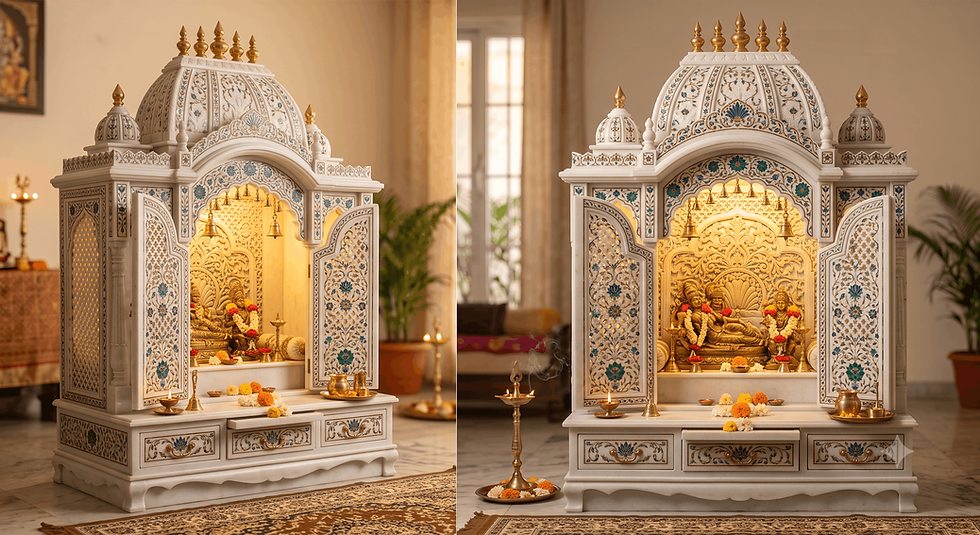
Elevate your space by incorporating traditional Pietra Dura inlay work into the marble floor or backdrop. Skilled artisans route channels into a base of pure white marble and embed contrasting semi-precious stones like Lapis Lazuli, Malachite, Jasper, or Mother of Pearl. These deep stone-inlaid floral patterns add immediate luxury and color permanence, ensuring the designs never fade over time.
6. Temple-Inspired Carved Pillars

Bring the grand architecture of ancient Indian temples into your home by using structural marble pillars. Incorporating hand-carved pillars featuring floral motifs, traditional fluting, or small relief carvings of deities grounds the room in heritage. For this grand look, textured beige Travertine or rich Indian marble varieties work beautifully, seamlessly bridging traditional craftsmanship with contemporary structural stability.
7. Modern Marble and Glass Fusion

For a striking contemporary twist, combine the weight of marble with the lightness of glass. Toughened glass panels or frosted glass doors framed in wood protect the inner sanctum while allowing the soft glow of the diya to filter through. Glass shelves embedded in a marble structure provide a clean, weightless display for placing multiple idols or framed prints.
8. Divine Sculptural Monolithic Mandir

Rather than an assembled room, a monolithic mandir uses a single, beautifully carved block of stone as the focal point. A solid marble backdrop featuring an intricately sculpted relief of Lord Ganesha, Radha-Krishna, or the sacred Om symbol anchors your home's spiritual energy. The smooth, non-porous texture of high-grade marble ensures that offering milk or water during rituals will not corrode the stone face.
9. Grand Temple Architecture (Domes & Arches)

If you have a spacious villa or a dedicated room, design your pooja space with grand structural elements such as a Shikhara (spire), custom marble arches, and a raised pitha (pedestal platform). Recreating the structural flow of a traditional temple creates a deep sense of reverence. Keep the core layout perfectly aligned with Vastu rules to maximize positive energy flow throughout the entire house.
10. Mixed Material Concept: Marble & Teakwood

Wood brings natural warmth, while marble offers cool refinement. Combining a polished white marble countertop with a rich teakwood or walnut framework creates a striking visual contrast. A popular choice among modern interior designers is to feature a backlit marble backdrop bordered by laser-cut wooden panels bearing sacred scripts or geometric designs.
Design Alignment: Looking to seamlessly integrate a sacred space into your current home layout?
Check out our custom 2 BHK Home Interior Packages tailored for smart, space-saving urban mandirs.
Moving into a larger home? Explore our comprehensive 3 BHK Home Interior Packages or luxury Villa Interior Design Packages to build a grand, dedicated sanctuary.
Frequently Asked Questions
1. Which marble is best for a home pooja room?
White Makrana marble is considered the premium and most auspicious choice for a home pooja room due to its exceptional purity, high calcium content, and low porosity, which prevents staining from oils or vermilion. For contemporary budgets, Ambaji white marble or premium Statuario Italian marble are excellent alternatives that offer high shine and beautiful, elegant veining.
2. What is the correct Vastu direction for placing a marble mandir?
According to Vastu Shastra, the North-East (Ishanya corner) of the home is the most auspicious zone for a pooja room, as it is governed by the water element and divine energies. If a North-East placement is unavailable, the East and North directions are suitable secondary choices. Ensure that the idols face West so that worshippers face East while praying.
3. How do you clean and maintain a marble pooja mandir?
Because marble is a natural, porous stone, it should be dusted daily with a soft microfiber cloth. For deeper cleanings, use only pH-neutral water or a specialized, mild stone soap. Avoid acidic cleaners like vinegar or lemon juice, and harsh chemical detergents, as they will instantly etch the polished surface and leave permanent dull spots on the stone.
4. How can I build a marble pooja unit in a compact apartment?
For tight spaces, choose a wall-mounted floating marble shelf or utilize an unused kitchen or living room niche. Incorporating integrated warm LED backlighting, a single distinct idol, and installing a mirror panel behind the altar will keep the unit compact while visually expanding the entire prayer corner.


Comments