Navratri Home Décor Ideas for Indian Homes (2027 Guide)

Quick Answer: How Do You Decorate Your Home for Navratri? To decorate your home for Navratri, start by cleaning and decorating the puja space with fresh flowers, a colourful cloth, and traditional diyas. Add a mango leaf and marigold toran at the entrance, create a rangoli, and use warm lighting, festive cushion covers, and decorative textiles to brighten your living room. A simple Navratri decoration setup can cost approximately ₹2,000–₹5,000, depending on the decorations you already have. |
Navratri is a time when Indian homes take on a festive look for nine days. The puja corner gets a fresh setup, the entrance is decorated with flowers and torans, and the living room becomes a gathering space for family and friends.
Whether you celebrate with a Kalasha and Garba nights, participate in Durga Puja celebrations, or follow Karnataka's traditional Gombe Habba, your home décor can help create a warm and festive atmosphere.
This guide from the Ideas and Living design team shares practical Navratri home décor ideas for Indian homes, with a special focus on Bangalore apartments and independent houses.
From decorating the puja space and entrance to choosing festive colours, lighting, and budget-friendly accessories, these ideas will help you prepare your home for the festival.
How to Decorate Your Puja Space for Navratri
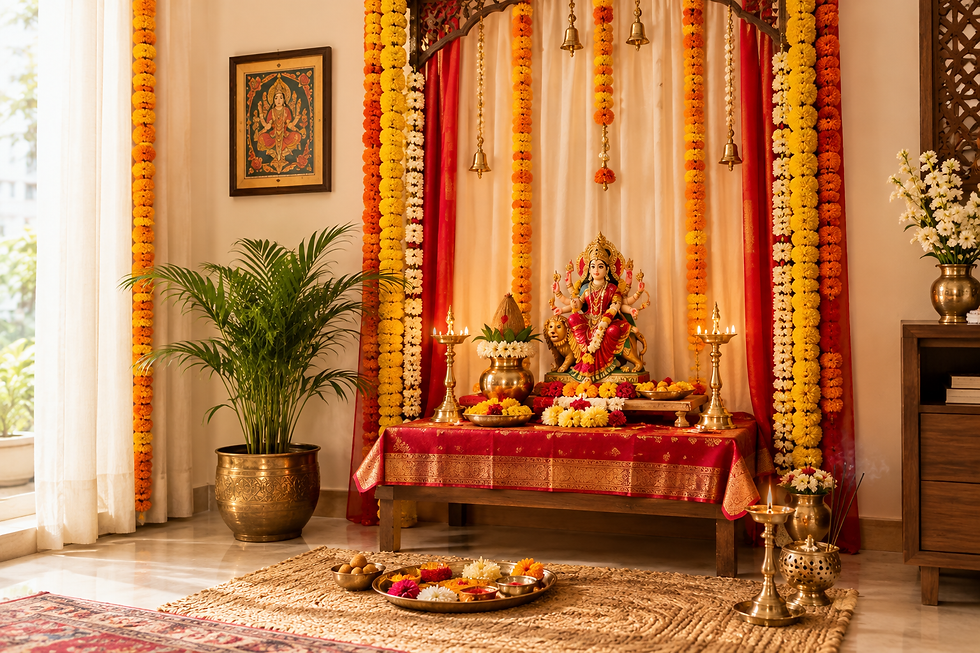
The puja space is the centre of Navratri celebrations, so start by creating a clean, peaceful, and organised setup.
1. Choose the Right Location for Your Puja Space
According to traditional Vastu Shastra beliefs, the north-east corner is considered an auspicious location for a puja space. If that area is unavailable in your Bangalore apartment, you can consider an east- or north-facing area, depending on your home's layout and family traditions.
2. Create a Festive Puja Platform
Use a wooden chowki, a low platform, or a simple stepped stand covered with a clean red, yellow, or saffron cloth. A silk saree, brocade fabric, or a Banarasi dupatta you already own can add a traditional touch without requiring additional purchases.
3. Decorate the Backdrop With Flowers and Fabric
Give the area behind the idols a festive appearance with a fabric drape, wooden arch, brass decoration, or hand-painted backdrop. Marigold and jasmine garlands can add colour and fragrance.
4. Keep the Puja Setup Simple
Avoid overcrowding the altar. Arrange the Kalasha, idols, lamp, flower plate, and prasad tray neatly so that everything remains accessible during prayers.
How to Set Up the Kalasha for Navratri
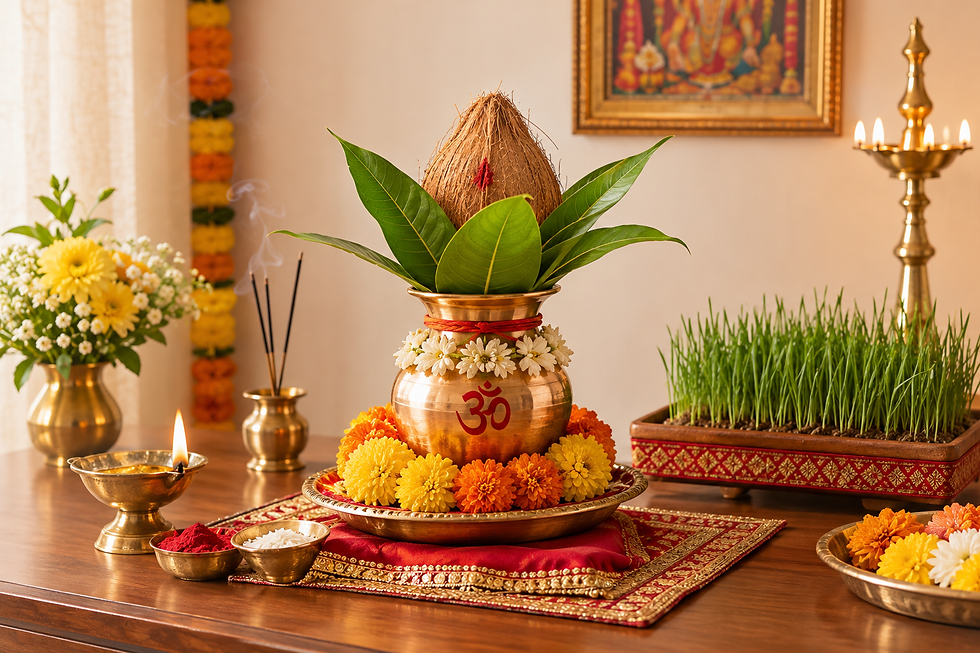
For families who perform Ghatasthapana, the Kalasha becomes an important part of the Navratri puja setup.
To create a traditional arrangement:
Choose a brass or copper pot suitable for the ritual.
Prepare the Kalasha according to your family's customs.
Decorate it with mango leaves and a coconut, where appropriate to your tradition.
Place it on a stable platform with a protective plate or tile underneath.
If you are growing barley or jowar in a shallow tray, position it where it receives suitable light and can be watered as needed.
Avoid placing water-filled vessels directly on wooden or laminate furniture, as moisture can damage the surface.
Decorating tip: Use a small decorative mat or tray beneath the Kalasha to protect the furniture and keep the puja area organised.
How to Create a Gombe Habba or Golu Display at Home
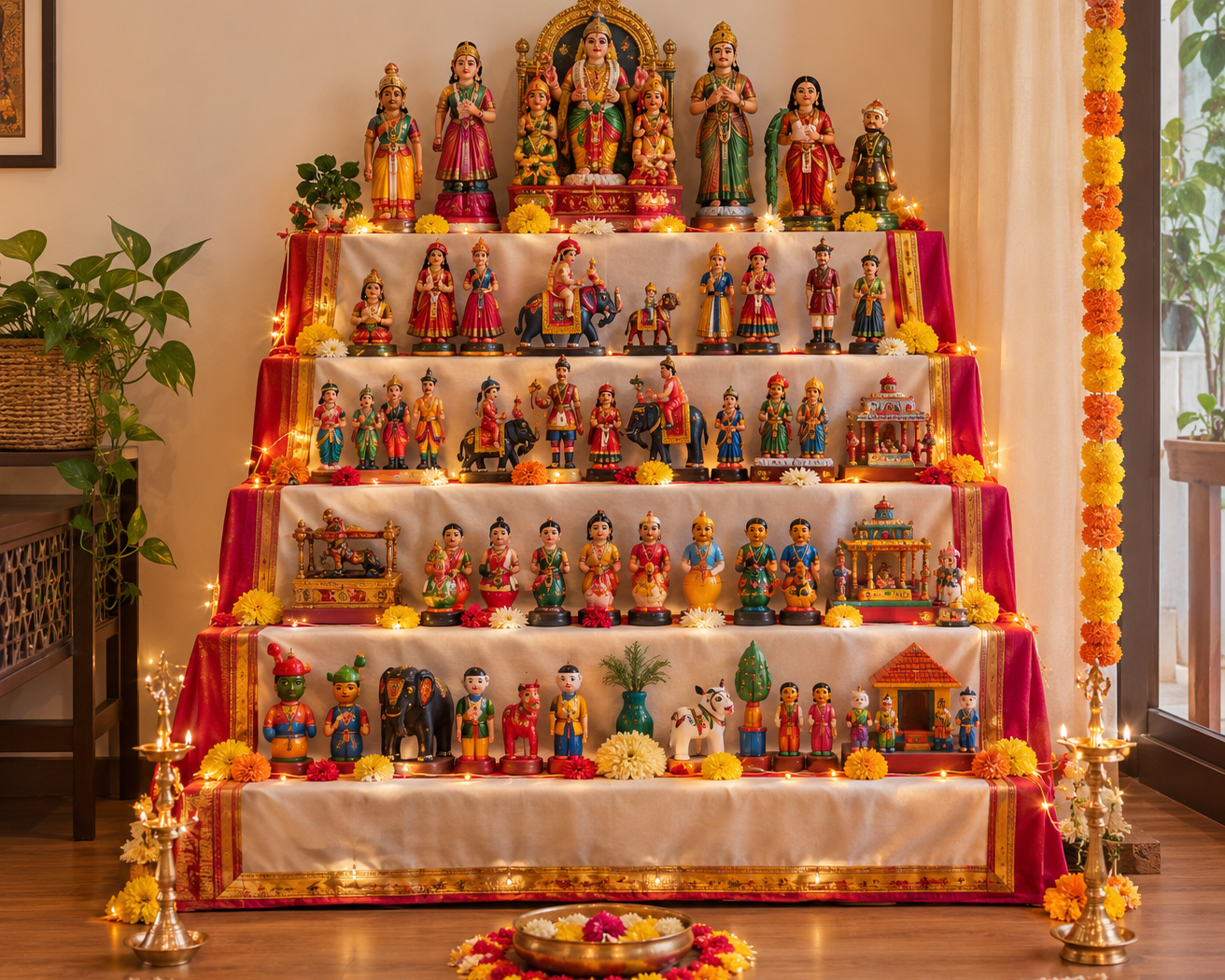
Gombe Habba is a traditional Karnataka celebration in which dolls and figurines are arranged on stepped platforms during Dasara. The display can include Mysore Dasara scenes, Channapatna toys, wooden Dashavatara sets, and heirloom dolls such as Pattada Gombe.
How to Build a Gombe Habba Display
Choose a stable stand with three, five, seven, or nine steps, according to your space and family tradition.
Cover the steps with a clean white or cream sheet.
Add colourful silk or cotton fabric for a festive appearance.
Arrange larger dolls on the upper steps and smaller figurines below, grouping them by theme.
Add small lights, flowers, or decorative elements between the rows.
Leave enough space in front for guests to view the display and for family members to perform aarti safely.
Gombe Habba Ideas for Small Apartments
If you live in a Bangalore apartment with limited floor space, choose a compact three-step stand and place it against a wall. A carefully arranged display with traditional dolls, flowers, and warm lighting can look festive without occupying an entire room.
Ensure that any stacked furniture or platforms are stable before placing dolls or electrical decorations on them.
How to Decorate Your Home Entrance for Navratri

The entrance is one of the easiest places to introduce a festive atmosphere. A few traditional decorations can make your home feel welcoming without requiring a major makeover.
1. Add a Toran to the Main Door
A mango leaf and marigold toran is a popular traditional choice for Navratri. For reusable décor, consider a handmade fabric toran with mirror work, small bells, or Kasuti embroidery.
In Bangalore, you can explore local flower markets and neighbourhood florists for fresh garlands.
2. Create a Rangoli at the Entrance
A rangoli adds colour and a traditional touch to your doorway. If you have limited time, try one of these options:
A simple rangoli made with coloured powders.
A floral rangoli using marigold and rose petals.
A reusable rangoli stencil or wooden rangoli board.
A decorative rangoli surrounding a central diya.
Choose a design that fits your available floor space and is easy to clean after the celebrations.
3. Add Decorative Lighting
Place LED diyas or suitable decorative lamps near the entrance to create a warm evening glow. Keep electrical decorations away from water, walkways, and flammable materials.
Which Colours Are Best for Navratri Home Décor?
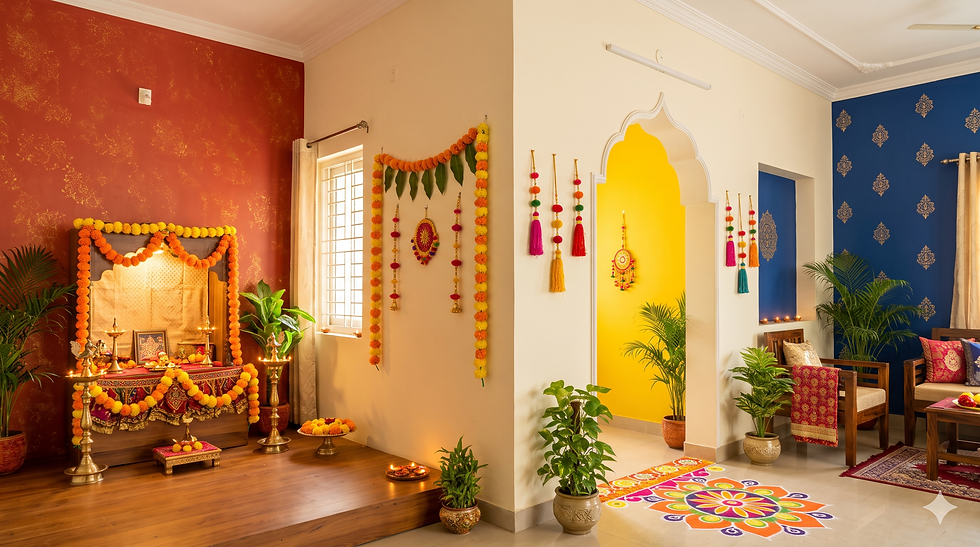
Red, yellow, green, gold, cream, and royal blue are popular choices for Navratri home décor. The best palette depends on your existing furniture, lighting, and personal preferences.
1. Popular Navratri Colour Combinations
Colour Combination | Overall Look | Where to Use It |
Red and gold | Traditional and festive | Puja corners, cushions, and decorative fabrics |
Yellow and white | Bright and fresh | Living rooms and homes with natural light |
Green and cream | Natural and calming | Rooms with wooden furniture and indoor plants |
Royal blue and gold | Elegant and rich | Living rooms with darker wooden furniture |
Saffron and white | Traditional and warm | Puja platforms and entrance decorations |
2. How to Use Navratri Colours Without Changing Your Entire Home
Instead of redecorating every room, introduce festive colours through small accessories such as:
Cushion covers.
Table runners.
Flower arrangements.
Puja platform cloths.
Decorative dupattas.
Small table accessories.
Some families follow the colour associated with each day of Navratri. Since these colours can vary according to the calendar or tradition followed, use small interchangeable accents rather than changing the entire room daily.
How to Use Festive Textiles to Refresh Your Living Room

Textiles are a simple way to give your living room a festive makeover without replacing large pieces of furniture.
1. Add Colourful Cushion Covers
Choose silk, brocade, Ilkal, or Kasuti-inspired cushion covers in colours that complement your existing sofa. Depending on the fabric, design, and seller, decorative cushion covers may cost approximately ₹300–₹900 each.
2. Style Tables With Festive Runners
Place a zari, embroidered, or block-printed table runner on your coffee table or dining table. Pair it with a flower arrangement or a small decorative bowl to complete the look.
3. Refresh Your Curtains
If you want a more noticeable change, consider lightweight cotton or silk-look curtains in warm festive colours. Choose fabrics that work with your existing furniture and allow sufficient natural light.
4. Create Comfortable Floor Seating
For family gatherings, aarti, or Garba evenings at home, arrange a clean dhurrie or jute mat with a few colourful bolsters. This creates additional seating without requiring extra chairs.
How to Light Your Home for Navratri
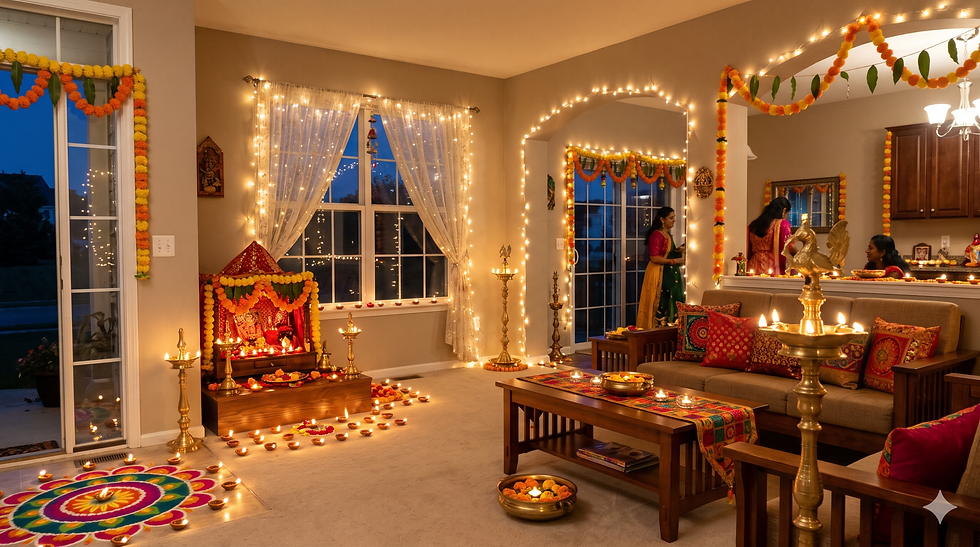
Lighting can transform the look of your home, particularly during evening prayers and family gatherings.
1. Navratri Lighting Ideas for Different Areas
Lighting Option | Best Place to Use It | Benefit |
Traditional diyas | Puja area and suitable entrance spaces | Adds a traditional festive touch |
Fairy lights | Windows, balconies, and Gombe Habba displays | Creates a soft decorative glow |
Brass or glass lamps | Entrance and dining area | Adds an elegant decorative element |
LED diyas and candles | Living rooms and accessible areas | Avoids an open flame |
Warm-white lights | Puja area and living room | Creates a softer atmosphere |
2. Navratri Lighting Safety Tips
Check electrical wires, plugs, and extension boards before installing decorative lights. Keep lights away from curtains and other flammable materials, avoid overloading electrical sockets, and never leave burning diyas or oil lamps unattended.
How to Decorate With Fresh Flowers and Indoor Plants
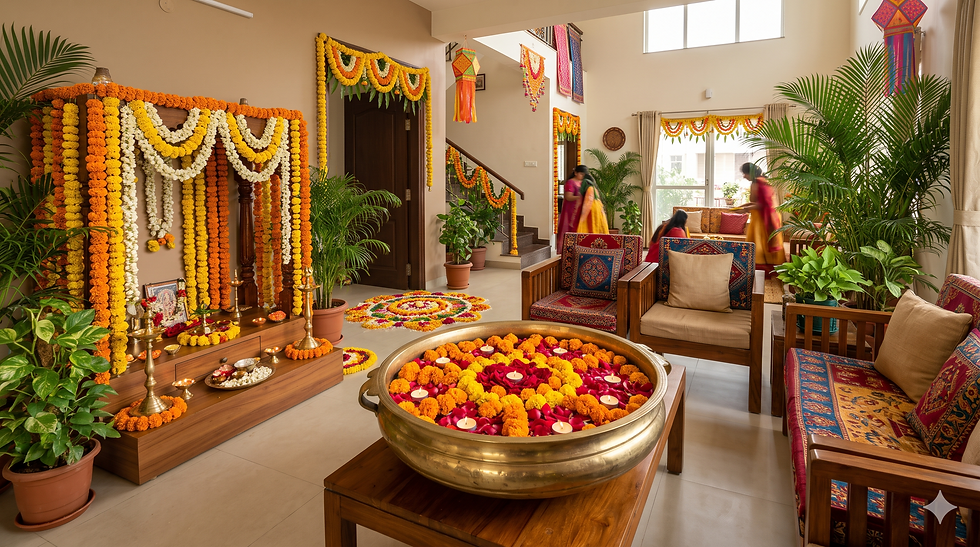
Flowers and greenery can make Navratri decorations feel fresh without requiring expensive accessories.
1. Use Traditional Flowers
Marigolds, jasmine, roses, and tuberose are popular choices for festive arrangements.
Try these ideas:
Float marigold and rose petals in a wide brass urli.
Place a vase of jasmine or tuberose on a side table.
Decorate the puja backdrop with fresh flower garlands.
Use small floral arrangements near the entrance or dining area.
2. Add Greenery to Your Décor
Money plants, areca palms, and other suitable indoor plants can add a natural touch near the entrance or living room.
If you prefer reusable decorations, artificial garlands can be stored and used again. Pair them with a few fresh flowers to maintain a natural appearance around the puja space.
What Are the Best Navratri Decoration Ideas for Small Apartments?
You do not need a large house to create beautiful Navratri decorations. With a few space-saving choices, even a compact 2BHK or 3BHK apartment can feel festive.
1. Space-Saving Navratri Decoration Ideas
Idea | How to Use It | Benefit |
Wall-mounted puja unit | Use a compact unit for the altar | Saves floor space |
Foldable puja platform | Set it up during the festival and store it later | Easy to store |
Vertical decorations | Hang bells, garlands, and lightweight décor | Uses wall space effectively |
One focal wall | Concentrate decorations in one area | Keeps the room from looking crowded |
Mirrors | Place them thoughtfully to reflect light | Can make the room feel more open |
Reusable decorations | Choose portable and durable accessories | Reduces repeated purchases |
2. Navratri Décor Ideas for Rented Homes
If you live in a rented apartment, choose removable hooks, adhesive strips suitable for the wall surface, freestanding stands, portable puja platforms, and reusable decorations. These options make it easier to decorate without drilling holes or permanently altering the walls.
How Much Does Navratri Home Decoration Cost in Bangalore?
The cost of Navratri home decoration in Bangalore depends on the size of your home, the materials you choose, and how much existing décor you reuse.
1. Navratri Decoration Budget Guide
Decoration Level | What It Includes | Approximate Budget |
Simple | Fresh flowers, toran, rangoli, diyas, and reused fabrics | ₹2,000–₹5,000 |
Moderate | New cushion covers, table runner, fairy lights, flowers, and a small Gombe Habba stand | ₹6,000–₹15,000 |
Premium | Custom puja backdrop, designer lighting, new curtains, a large Gombe Habba display, and professional floral styling | ₹20,000 and above |
Note: These figures are indicative estimates, not fixed market rates. Actual costs may vary depending on materials, product quality, installation requirements, and the vendor.
2. How to Decorate for Navratri on a Budget
If you want a festive look without spending too much:
Reuse sarees, dupattas, and decorative fabrics for the puja backdrop.
Buy fresh flowers for the entrance and puja space.
Choose a simple toran and rangoli instead of elaborate installations.
Reuse fairy lights and decorations from previous festivals.
Change cushion covers and table accessories instead of replacing furniture.
Invest in reusable décor that can be stored safely for future festivals.
A simple setup can be achieved for approximately ₹2,000–₹5,000, depending on what you already own and local prices.
What Common Navratri Home Decoration Mistakes Should You Avoid?
A festive home should look beautiful while remaining comfortable and safe.
Avoid these common mistakes:
Common Mistake | What to Do Instead |
Overcrowding the puja area | Keep the idols and ritual items visible and accessible |
Ignoring the available space | Choose decorations that suit your room size |
Using too many colours | Stick to a coordinated colour palette |
Neglecting electrical safety | Check wiring and keep lights away from curtains |
Leaving lamps unattended | Supervise burning diyas and oil lamps |
Forgetting storage | Clean and pack reusable decorations carefully |
Placing water directly on wooden furniture | Use a protective tray or tile under water-filled vessels |
If you follow Vastu principles, consider the layout and placement recommendations in the context of your home's design and your family's practices.
When Should You Start Planning Navratri Decorations?
Start planning your Navratri decorations two to three weeks before the festival. This gives you time to decide on a colour palette, check your existing decorations, buy flowers and accessories, and prepare the puja space.
If you are planning a larger change, such as a built-in puja unit, custom Gombe Habba storage, or a new lighting arrangement, begin discussions with your interior designer two to three months in advance.
Planning early can help you manage costs, avoid last-minute shopping, and ensure that your home is ready for the celebrations.
Key Takeaways: Navratri Home Décor Ideas
Start with a clean, organised puja space and decorate it with flowers, fabrics, and traditional accessories.
Use a mango leaf toran, rangoli, and warm lighting to create a welcoming entrance.
Choose a coordinated colour palette and refresh your living room with cushion covers, table runners, and festive textiles.
Try a compact Gombe Habba display to celebrate Karnataka's Dasara traditions, even in a small apartment.
Reuse decorations and fabrics to keep costs manageable.
Prioritise electrical safety, stable displays, and careful placement of diyas.
Plan ahead if you want a custom puja unit, storage solution, or more extensive interior changes.
Make Your Home Festival-Ready With Ideas and Living
At Ideas and Living, we design homes in Bangalore that balance everyday functionality with festive celebrations. From Vastu-conscious puja units and display shelves to thoughtful lighting plans and storage for seasonal décor, our interior design solutions help make your home practical and welcoming throughout the year.
If you are planning a puja room, a living room refresh, or a complete home interior, connect with the Ideas and Living team to discuss your requirements and explore a consultation.
Frequently Asked Questions About Navratri Home Décor
1. Which direction is best for a Navratri puja setup at home?
According to traditional Vastu Shastra, the north-east corner is considered auspicious for a puja space. If that location is unavailable, an east- or north-side arrangement may be an alternative, depending on your home's layout and religious practices.
2. How can I decorate my home for Navratri on a small budget?
Use fresh flowers, a simple toran, rangoli, diyas, and existing fabrics to decorate your home. Reusing sarees or dupattas as a puja backdrop and adding fairy lights can help you create a festive look for approximately ₹2,000–₹5,000, depending on what you already own.
3. What is Gombe Habba, and how do I set it up at home?
Gombe Habba is a Karnataka tradition of displaying dolls and figurines on stepped platforms during Dasara. Choose a stable stand, arrange the dolls by size or theme, and decorate the display with fabric, flowers, and lights while keeping the area accessible.
4. Which colours are best for Navratri home decoration?
Red, gold, yellow, green, cream, and royal blue are popular choices. You can use these colours in cushion covers, flower arrangements, table runners, and puja fabrics to create a coordinated festive look.
5. How can I decorate a rented home for Navratri without damaging the walls?
Use removable hooks, suitable adhesive strips, freestanding stands, portable puja platforms, and reusable decorations. Avoid permanent fixtures unless you have permission from your landlord.
6. How can I keep Navratri decorations safe around children and pets?
Use LED diyas in accessible areas, secure electrical cords, keep lights away from curtains, and place decorative objects on stable surfaces. Never leave burning lamps unattended, and keep small or fragile decorations out of reach.
7. When should I start planning Navratri home decorations?
Begin two to three weeks before Navratri for shopping and decorating. If you plan to install a custom puja unit, build storage, or make significant interior changes, start planning two to three months in advance.



Comments